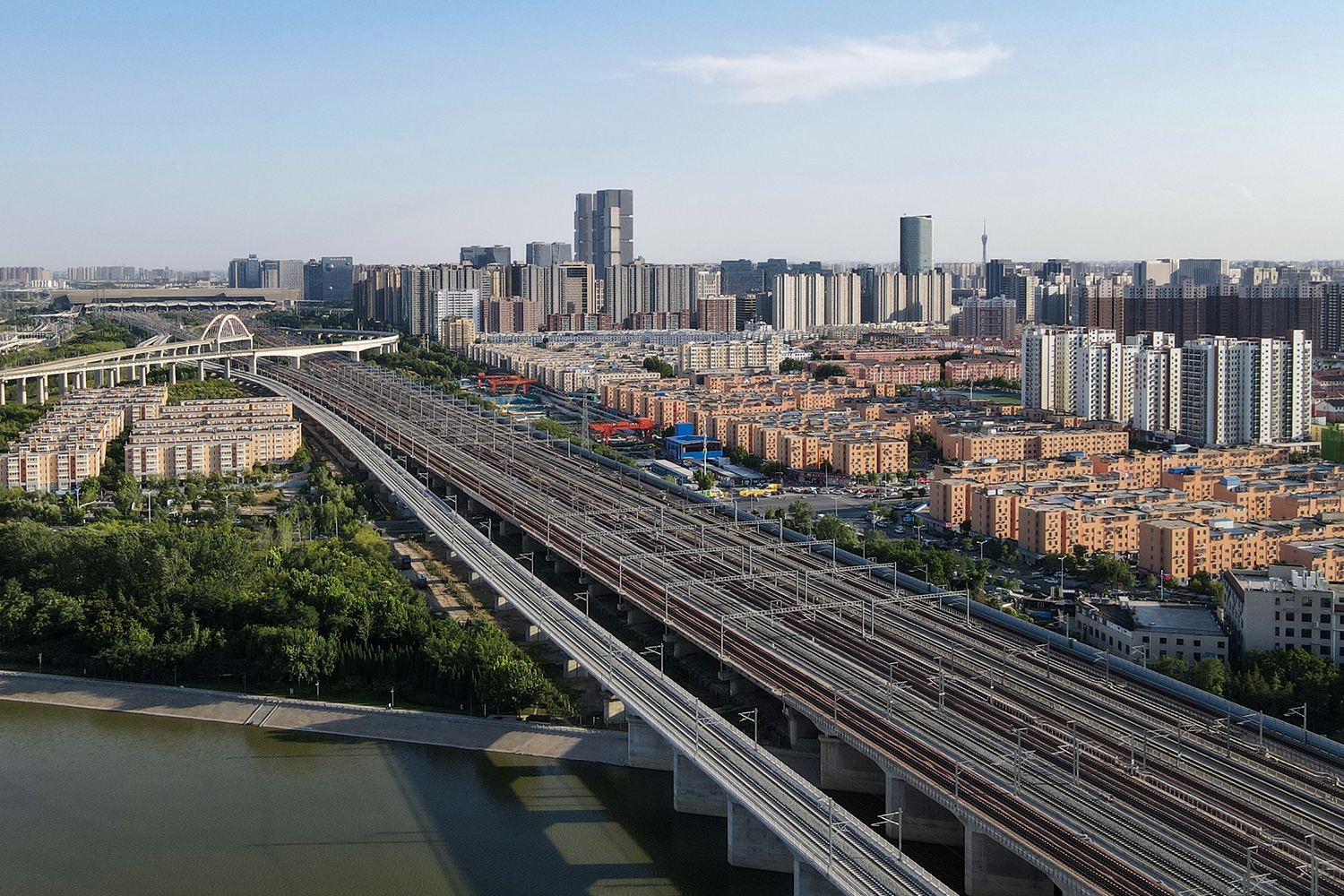
How to Book China Train Tickets as a Foreigner
Passport registration, booking windows, seat classes and station check-in: how visitors buy China train tickets.
Read the article →
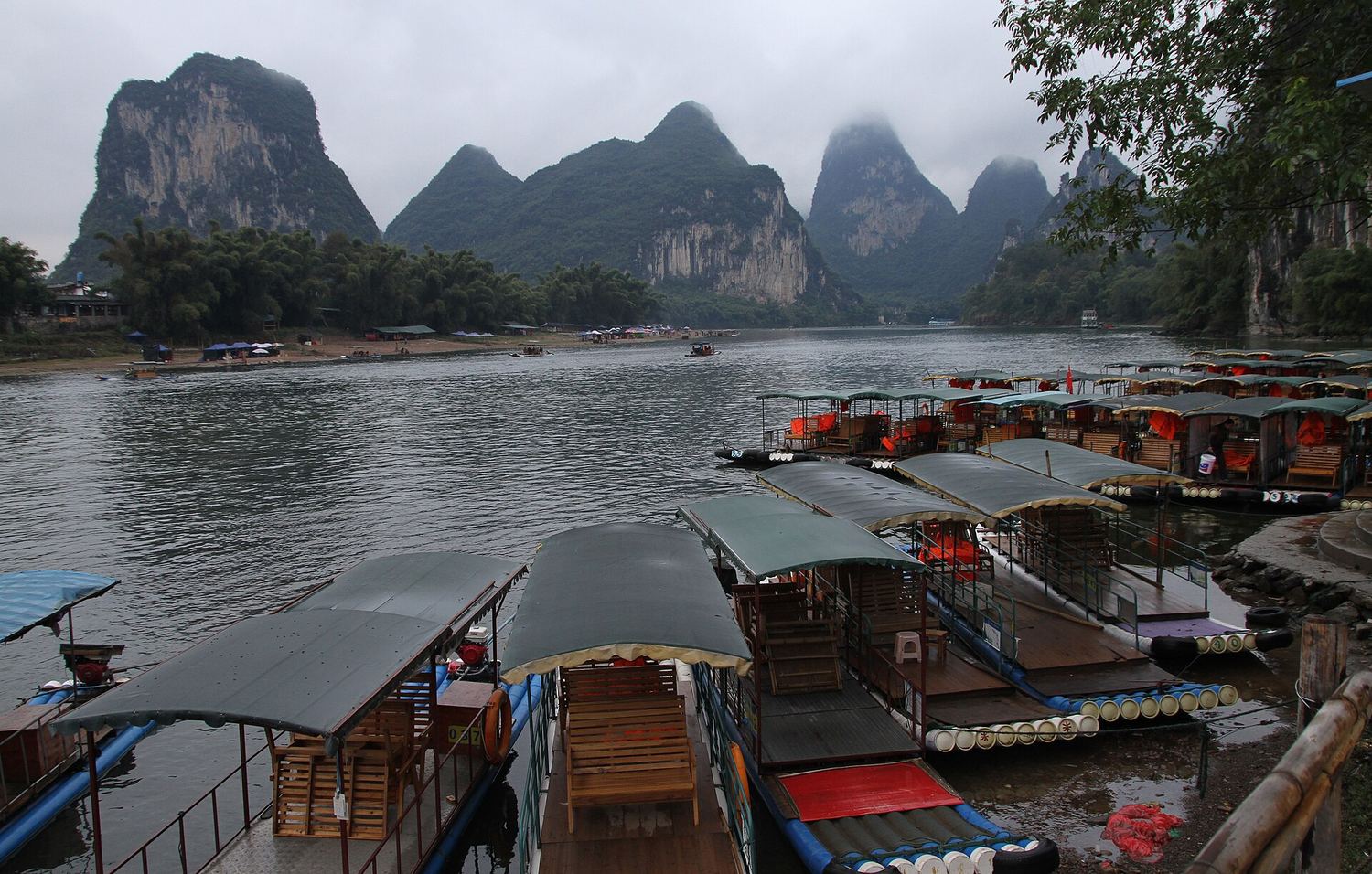
China is continental in scale, so the best month depends on where. Weather, crowds and holidays, month by month.
China spans the same latitudes as Scandinavia to the tropics and sits at five very different altitudes. Beijing and Harbin have real winters. Guangzhou and Sanya never do. Kunming, at 1,900 metres, is mild in every month. Lhasa and Shangri-La are cold and thin-aired even in July. So the useful question is not “when should I go to China?” but “when should I go to the places on my list?”
Three rules cover most trips. Spring (April to May) and autumn (September to October) are the best all-round windows for the classic northern cities. Yunnan and the far south work almost any month. And the calendar matters as much as the climate: two fixed national holidays move more people around than any weather event, and both are easy to avoid.
For a first trip covering Beijing, Xi’an, Shanghai or Hangzhou, this is the strongest stretch of the year. Beijing warms to a comfortable 18–25°C, the winter haze clears, and the Great Wall is green rather than grey. Xi’an is ideal for the Terracotta Army, Hangzhou and Suzhou are at their best in the gardens, and the Li River at Guilin is in full flow with the Longji rice terraces flooded and mirror-like.
Two dates to watch. Qingming, around 5 April, is a three-day domestic holiday, and Labour Day runs 1–5 May, when flights, trains and the headline attractions fill quickly. Both fall inside this window, so book those segments early or route around them. If you are bringing children, note that Chinese school holidays do not line up with Malaysian and Singaporean ones, which works in your favour in April and May.
Southern and eastern China in July and August is genuinely uncomfortable: Shanghai and Guangzhou hold 33–36°C with high humidity, and the coast from Fujian to Hainan sits in typhoon season into September. That is not a reason to write off summer, because it is the best time to be in the mountains and on the plateau.
Yunnan is at its finest — Kunming stays around 20–25°C, Dali and Lijiang are dry between showers, Shangri-La is a mild 15–20°C. Qinghai and Gansu are in bloom, Inner Mongolia’s grasslands are green, Lhasa is warm by day with light until 8pm, and Harbin is pleasant. The trade-off is that this is peak domestic holiday season, with Chinese school holidays from early July to the end of August, so book hotels and rail seats well ahead.
Autumn is the best month set China has. Beijing and Xi’an see clear, dry days around 15–25°C with the cleanest air of the year; Huangshan and Zhangjiajie are at their most dramatic; and Inner Mongolia and Xinjiang turn gold in late September and October. It is also the best time for the Great Wall, when visibility is crisp and the summer crowds have gone.
The complication is National Day Golden Week, 1–7 October — the biggest domestic travel surge after Spring Festival. Mid-Autumn adds a shorter three-day peak (15 September in 2027). The trick is to use the first half of September, or to arrive after 8 October; both are quiet, and late October remains excellent across the north and east.
Winter is the least popular season and the one we get the most questions about. Northern China is cold and dry — Beijing sits between 0 and −8°C in January — but the reward is that hotels, restaurants, trains and shops are properly heated, so indoor sightseeing is entirely comfortable. Snow on the Great Wall and the Forbidden City is a genuinely special sight, and the Harbin Ice and Snow Festival, from early January into February, is a trip in itself.
Three things to know. The south — Shanghai, Hangzhou, Guilin, Chengdu — has no central heating, so 5°C there feels colder than −5°C in Beijing; pack accordingly. Tropical Hainan and Sanya stay at 22–28°C and are the winter escape for northern China, so December and January are peak there. And foreign travel to Tibet is restricted in parts of late winter, so plan Tibetan routes for spring or autumn instead.
Spring Festival and National Day Golden Week are the two periods to plan around rather than into. In 2027, Chinese New Year falls on 6 February, with the public holiday roughly 5–11 February — but the migration around it, known as chunyun, runs for about six weeks from late January into early March. Trains sell out within minutes, domestic airfares rise 50–200%, small restaurants close, and the sights that stay open are packed with domestic visitors.
The shoulders on either side are excellent value. Mid-March to mid-April is mild and uncrowded. Late April is beautiful if you dodge the Labour Day window. The first half of September is arguably the single best week of the year. And 3 November to 20 December is the quietest, cheapest and most underrated stretch for Beijing, Xi’an and Shanghai: cold, but clear and calm.
Dates drive price and comfort more than anything else we control, so the calendar is usually the first thing we look at. In practice that means reordering a route so the seasonal highlight comes first, holding hotel and rail inventory before you commit to flights, and building a weather buffer into any day that involves a mountain, a cruise or a flight.
If your dates are fixed by school holidays or annual leave, tell us the window and we will build around what genuinely works in that month rather than forcing a route that does not. Send your dates and the ages of everyone travelling on WhatsApp and we will come back with two or three options, plus an honest note on what the weather is likely to be doing.

Tell us your dates, who is travelling and roughly what you want to see. Within 24 hours a China-based planner sends you a day-by-day itinerary with everything itemised — free, and with nothing to pay until you approve it.
Monday–Sunday, 09:00–21:00 Beijing time (UTC+8)
Free written itinerary within 24 hours