
The Best Time to Visit China: A Month-by-Month Guide
China is continental in scale, so the best month depends on where. Weather, crowds and holidays, month by month.
Read the article →
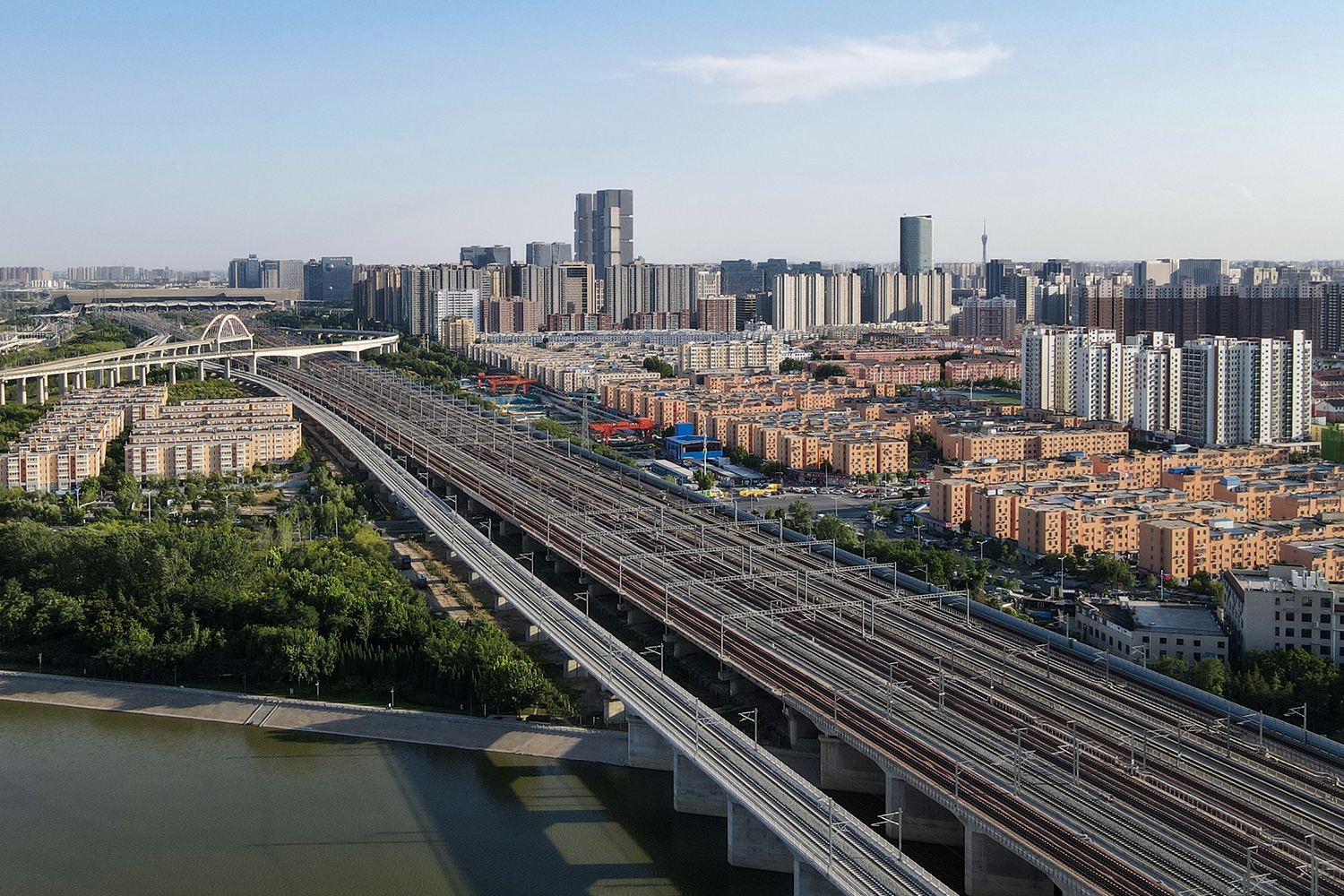
Passport registration, booking windows, seat classes and station check-in: how visitors buy China train tickets.
China Railway carries more than ten million passengers on an ordinary day and over twenty million at Spring Festival, and the booking system has quietly become foreigner-friendly. There are three realistic ways to buy a ticket now, and the right one depends on how fixed your dates are.
12306 is the official app and the only source of real inventory. It has an English interface, sells at face value with no markup, and accepts Alipay and WeChat Pay, both of which now take international cards — which removed the single biggest obstacle foreigners used to face. You register with your passport number and verify your identity; occasionally you will still be asked to confirm the passport once at a station ticket office before your first booking.
Trip.com and similar platforms are easier to use and take foreign credit cards, and they are a perfectly reasonable choice for a simple one-off booking. Expect a booking fee, and expect the inventory to appear slightly later than on 12306 on the busiest dates.
The third route is having someone book on your behalf. For anything with a fixed date that is what we recommend, and it is not only about convenience: we book directly on 12306 the moment the sales window opens, in a single transaction, and hold the seats rather than hoping they are still there tomorrow. On holiday dates, that difference decides whether you get the train or the 5.50am alternative.
Tickets are not sold months ahead. Sales open fifteen days before departure, counting the day of travel (verified October 2026), at a fixed hour set by the departure station — commonly 8am, 10am, noon, 1.30pm or 4pm. The 12306 app shows the exact release time for your route, and it differs between cities. On popular corridors at popular times the good seats go quickly: second class on a morning Beijing to Xi’an departure can disappear within minutes of release on a holiday weekend, while a mid-afternoon train on a Tuesday in May will still have seats a day or two out.
Two rules cover almost everything. During Spring Festival or National Day Golden Week, book the hour the window opens and accept the train you can get — those are the only periods where a full train means a changed itinerary rather than a different carriage. For ordinary dates, book three to five days ahead for weekend afternoon departures between big cities, and a day or two ahead otherwise. Sunday morning departures after a public holiday are the second-worst case after the holidays themselves. If your trip has one long rail leg — Beijing to Xi’an, or Guilin to Guangzhou — treat that leg as the fixed point the rest of the day is built around.
On high-speed trains there are three classes. Second class is 3+2 seating, five seats across a row, and what we book by default for short legs. First class is 2+2 with wider seats and more legroom, roughly 60% more expensive and worth it on journeys over three hours or for older travellers. Business class is 1+2 with lie-flat seats on the newest trains and costs about three times second class. Every class has power sockets, tray tables and access to the dining car or trolley.
Sleeper trains are a separate world. Soft sleeper is a four-berth compartment with a door — the one to choose for families, women travelling alone and anyone over 60. Hard sleeper is six berths in an open bay, three high, cheap and perfectly fine if you are not fussy. Some overnight trains also carry a two-berth deluxe soft sleeper. Smoking is banned on all Chinese trains, including the vestibules.
Paper tickets no longer exist. Your booking is tied to the passport you booked with, so bring that exact passport — a photocopy or a different document will not get you through. Allow 45 to 60 minutes at a major station such as Beijing South, Shanghai Hongqiao or Guangzhou South, which are the size of airports, with security screening on entry and a long walk to the platform. Thirty minutes is enough at a small station.
Boarding gates open about fifteen minutes before departure and close five minutes before, and the train leaves without you. Foreign passports usually will not work in the automatic gates, so queue at the staffed lane beside them and hand the passport over; the officer scans it and waves you through. Carriage numbers are marked on the platform, and high-speed trains stop for only two to four minutes, so be at the right door with your bags before the train arrives.
Use the waiting list on 12306. You join a queue for any cancellation, with several trains or seat classes as options, and the app refunds you automatically if it cannot secure a seat. On the busiest corridors it is worth joining two or three days out: cancellations arrive steadily and the queue is served in order.
Three other moves work when everything looks sold out. Book from a neighbouring station, or through to a station one stop beyond your destination, because a longer journey occasionally has seats when the segment you want does not. Split the trip at a hub and change trains. And stay flexible about the hour, since the 7am and 6pm departures are the ones everybody wants. If plans change, refunds are free more than eight days before departure, 5% between 48 hours and eight days, 10% between 24 and 48 hours, and 20% inside 24 hours.
Each adult may carry 20kg, and on high-speed trains the total of length, width and height should stay under 130cm. Nobody weighs a suitcase in practice, but genuinely oversized bags are refused. Racks run above the seats and there is luggage space at the end of each carriage. Every carriage has a hot water dispenser — bring a cup or a flask, because tea and instant noodles at 300km/h are part of the experience — and a trolley sells snacks and drinks. On some routes you can order a meal to your seat through the 12306 app.
Toilets are a mix of squat and seated depending on the train; carry tissues and hand sanitiser, since paper is not always supplied. Wi-Fi is fitted to some trains and rarely reliable, so a travel eSIM is the answer if you want to message or work on the move. Book every passenger in one transaction to have the best chance of seats together, and watch carriage placement: for anyone with limited mobility we book seats near the door, because the walk down a 400-metre platform is the hardest part of the day.
Rail is where local knowledge saves the most time on a China itinerary. We book on the day sales open for every leg that matters, in one transaction, and we match the departure to the day’s sightseeing rather than to the cheapest fare — a 9.40am train is a better use of a morning than a 6.30am one, and a mid-afternoon train protects lunch. Where a flight is genuinely the better choice, we say so.
Before you fly you receive the train number, carriage and seat numbers in your itinerary. On the day, your guide meets you at the station entrance, walks you through security and to the gate, and your driver is waiting when you step off at the other end. For the classic first leg, see our Beijing to Xi’an high-speed rail guide. Send your dates on WhatsApp and we will tell you honestly where to take the train and where to fly.

Tell us your dates, who is travelling and roughly what you want to see. Within 24 hours a China-based planner sends you a day-by-day itinerary with everything itemised — free, and with nothing to pay until you approve it.
Monday–Sunday, 09:00–21:00 Beijing time (UTC+8)
Free written itinerary within 24 hours