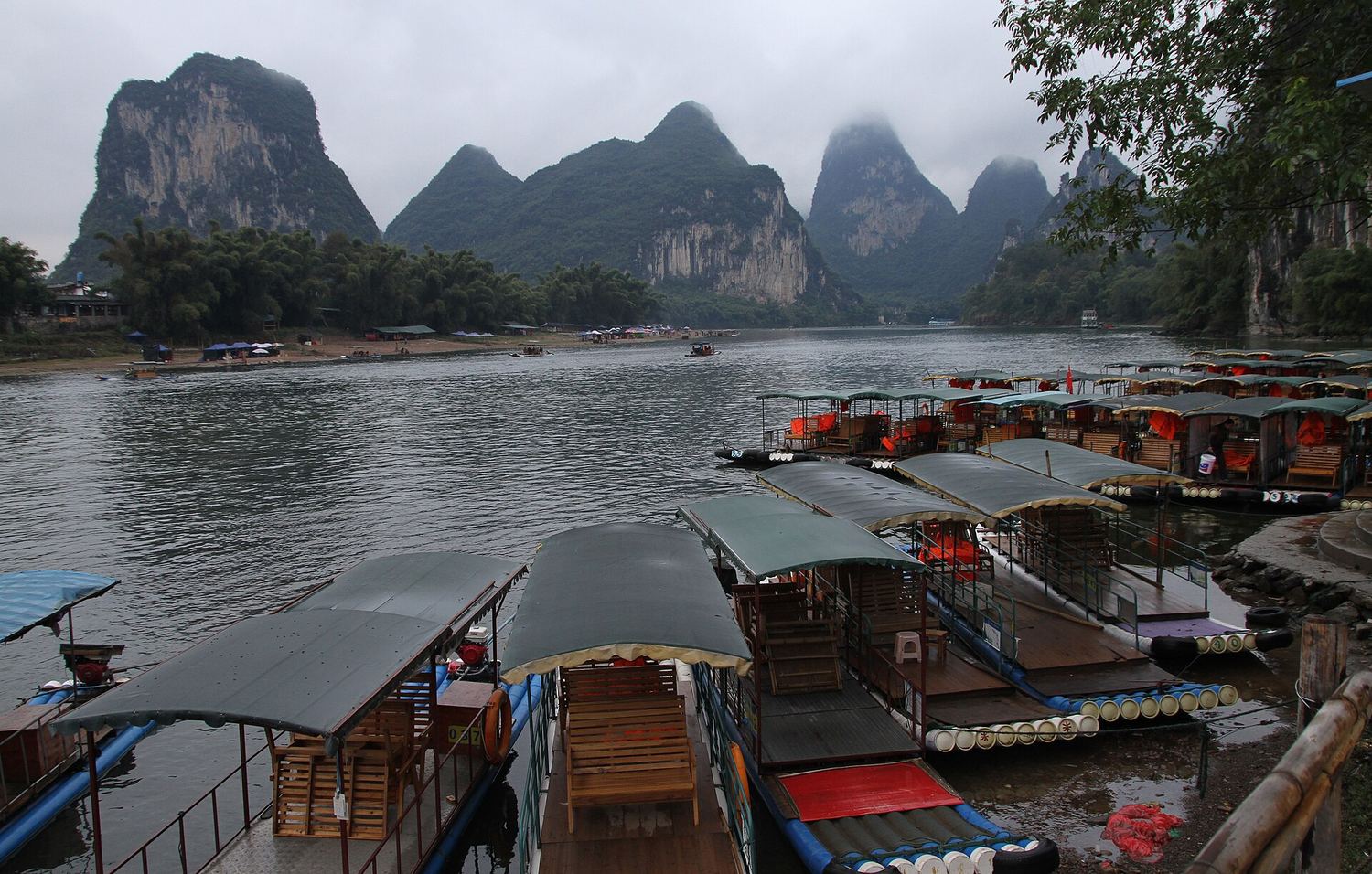
The Best Time to Visit China: A Month-by-Month Guide
China is continental in scale, so the best month depends on where. Weather, crowds and holidays, month by month.
Read the article →
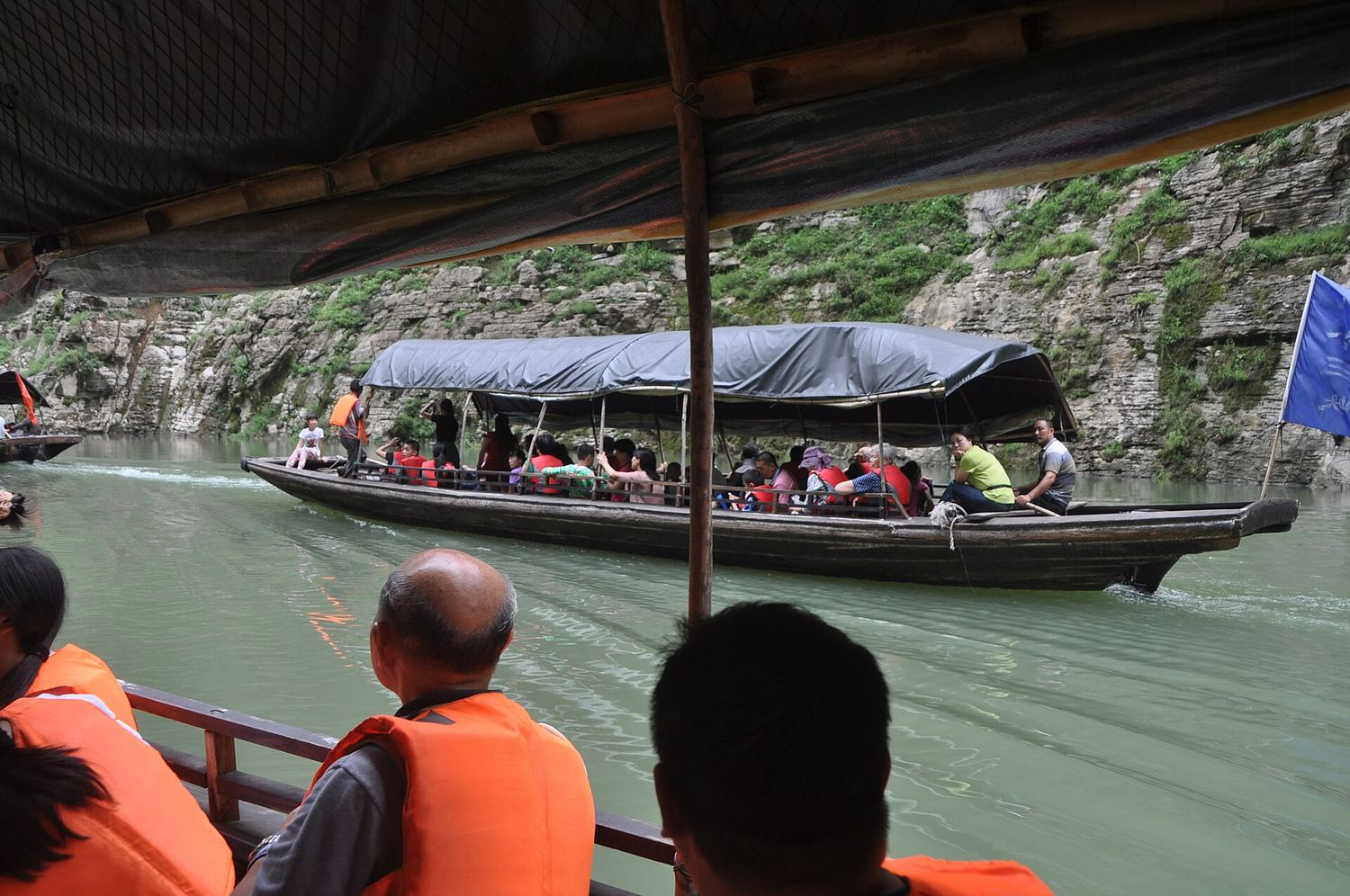
What a Three Gorges cruise actually includes, which ships and cabins to choose, and who should skip it.
A Yangtze cruise is the most restful four days available in China. You board in Chongqing, unpack once, and wake up to limestone cliffs on both sides while somebody else handles every meal, transfer and ticket for roughly 660 kilometres of river. On a first trip that also covers Beijing, Xi’an and Shanghai, it is the part guests mention most often afterwards — and almost always for the same reason: it arrived exactly when they needed to stop moving.
What it is not is an ocean cruise. There is no casino, no choice of restaurants, no swim-up bar. There is one dining room, a top deck, a small gym and an evening show, and the sightseeing happens in escorted groups, with buses and steps and crowds at the shore stops. If you want a floating resort you will be disappointed. If you want to see the Three Gorges, sleep well and hand over the logistics for four days, it works very well.
Downstream, Chongqing to Yichang, is the standard: four days and three nights. You board in the late afternoon, spend the first full day at the shore stops before the gorges, pass Qutang, Wu and Xiling gorges and the dam on the last day, and disembark in Yichang in the morning. Upstream, Yichang to Chongqing, is five days and four nights and adds one stop.
Downstream is faster and slightly cheaper because you pay for one night less, which suits anyone slotting the cruise into a longer route. Upstream gives you more daylight in the gorges if you are travelling for photographs, and a slower rhythm overall. Both sail year round, though a few ships come out of service for maintenance in January and February, so choose the ship first and fix the date around it.
The route is decided by the river; the ship is the variable that decides whether you enjoy it. At the top end are the international-standard five-star vessels — the Century and Victoria fleets, the President series and a handful of smaller luxury ships — with bilingual guides, larger cabins, better food and announcements you can follow. Below them are older four-star domestic ships where everything from the safety briefing to the shore briefings is in Chinese. If you do not read Chinese, that difference is worth paying for.
On cabins, book a balcony. Most of the scenery is watched from the ship, and a private three square metres with a kettle and two chairs is why people come home happy from this trip. Standard cabins with a window are cheaper, but you end up on the top deck with everyone else. Suites add space rather than a better view. One question worth asking before you pay: cabins low down and near the engine or the dining room are cheaper for a reason.
The fare covers your cabin, three meals a day aboard, the main shore excursions, evening entertainment and the captain’s welcome. Drinks, tips, laundry, the spa and the optional excursions are extra, and the optional list is where a cruise quietly costs more than you expected. On a typical sailing it includes White Emperor City at the entrance to Qutang Gorge, sometimes the Lesser Three Gorges or a riverside village, and the Three Gorges Dam ship lift.
Our advice is to pick two and skip the rest. The excursions are escorted groups on a fixed schedule, and a morning on your own balcony while the ship moves through Wu Gorge beats a rushed bus ride. Your onboard guide will ask for decisions on the first evening, so decide in advance — and ask us which options are genuinely worth it on your sailing, because the list changes between ships and seasons.
The Three Gorges Dam at Sandouping is 2,309 metres long, 185 metres high and the largest hydroelectric plant in the world. Your ship passes it through a five-stage ship lock, which takes three to four hours and is oddly compelling — you sit on deck in the dark watching concrete walls rise past you. The dam visitor area is a separate stop, with escalators up to the viewing platform and a museum.
The reservoir behind the dam raised the river level by around 110 metres, which is why the gorges today are wider and calmer than the images in older guidebooks. They are still genuinely dramatic. The ship lift, which raises a vessel the same 113 metres in about forty minutes, is not used by the big cruise ships; it is an add-on excursion on a smaller boat, and a good one if engineering interests you as much as scenery.
April, May, September and October are the best months: mild, green, and clear enough to see the cliff faces. Summer is hot and humid with the highest water and the most dramatic cloud, and July and August on the river are uncomfortable for anyone who dislikes humidity. Winter is quiet, misty and considerably cheaper, with fewer passengers and shorter days.
Fog is part of the landscape. The gorges are famous in mist, and there will be at least one morning when you cannot see the far bank — atmospheric, but worth knowing before you plan a cruise as your only mountain scenery. Water levels also change what is walkable on shore, so stops are sometimes altered at short notice. That is normal on the river, not a failure of your operator.
The natural pairing is two nights in Chongqing — hotpot, Hongya Cave after dark, the Ciqikou lanes — then the cruise, then the high-speed train from Yichang to Wuhan in about two hours, or onward towards Shanghai. Chengdu, an hour from Chongqing by high-speed rail, adds pandas and the Leshan Buddha before you sail. We usually place the cruise after the most active stretch of an itinerary. One note for Muslim travellers: the buffets on the river ships are not halal, and separate halal catering is limited and ship-dependent, so raise it before booking and we will confirm what can be arranged or plan the meals around it.
Every cruise we book includes a balcony cabin on a bilingual ship, a private transfer in Chongqing with a guide for the city days, and a driver waiting in Yichang. We also book your chosen shore options in advance, so you are not deciding at 9pm after a long day. If you are travelling with children or grandparents, say so — this is one of the few multi-day experiences in China that genuinely suits both, and deck and cabin position make the difference.
Tell us your dates, who is travelling and roughly what you want to see. Within 24 hours a China-based planner sends you a day-by-day itinerary with everything itemised — free, and with nothing to pay until you approve it.
Monday–Sunday, 09:00–21:00 Beijing time (UTC+8)
Free written itinerary within 24 hours